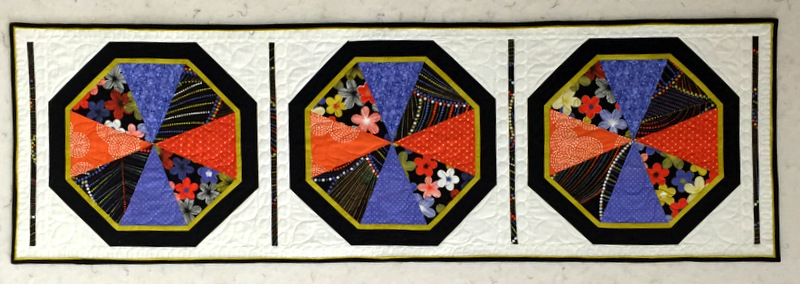
Seeing one of your own designs interpreted by another quilter is one of the pleasures and rewards of designing quilts. Last weekend I was at the Pine Needle, the local quilt shop where I teach, and was thrilled to see Maxine Borosund’s version of my pattern Season to Taste:
Maxine’s Table Runner
Isn’t that stunning? Season to Taste can be a table runner or a wall hanging, depending on the maker’s point of view and intended use of the finished piece. Maxine’s version is a table runner.
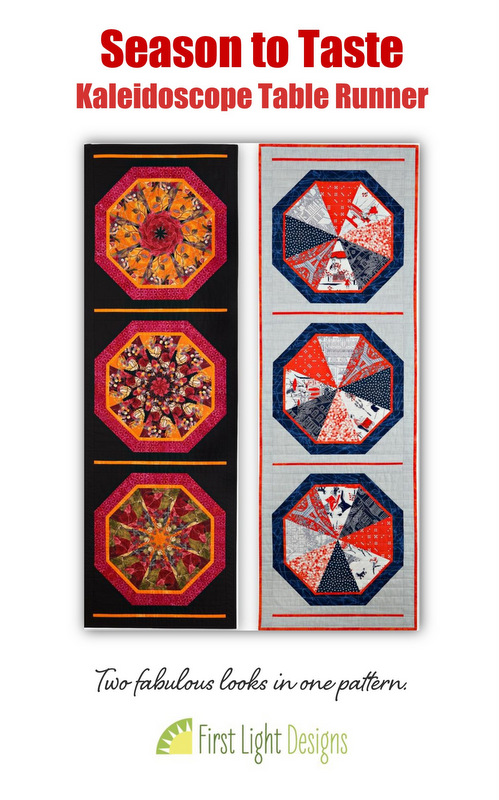
The triangles that form the octagon can be made with a variety of fabrics, like Maxine’s, or from one fabric for a true kaleidoscope effect. You can see both options on the cover of the pattern:
pattern cover
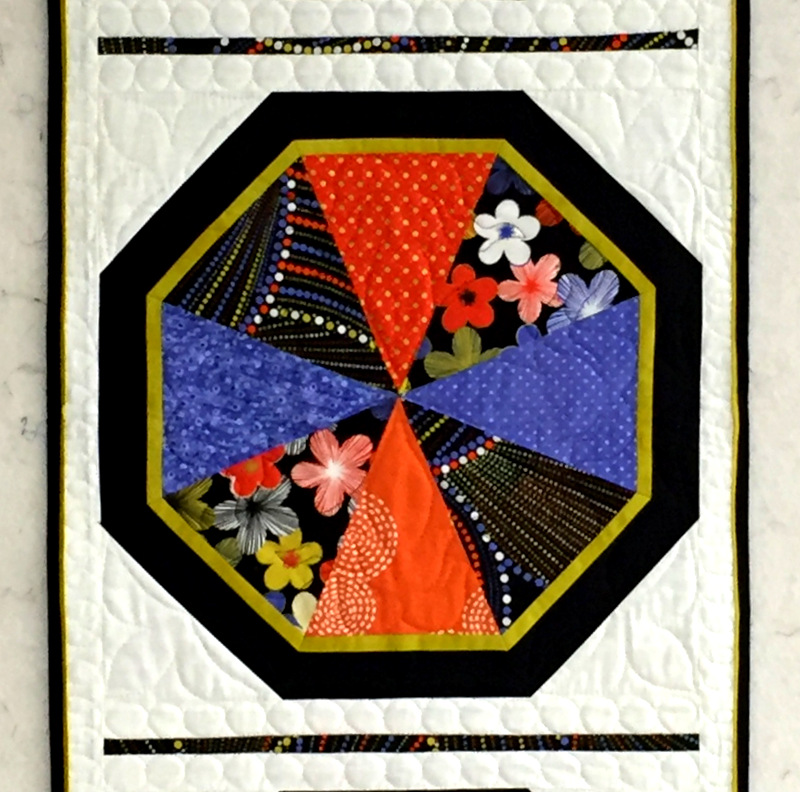
Maxine added a design element to her quilt that I just love: a very thin flange right next to the bound edges. Take a look at this close-up:
See that narrow strip of chartreuse right next to the binding? She did a beautiful job on the flange, as well as the seams in the eight triangles where the thin chartreuse accent strips and outer black strips meet. Everything lines up perfectly, the sign of a quilter who sews with care and precision.
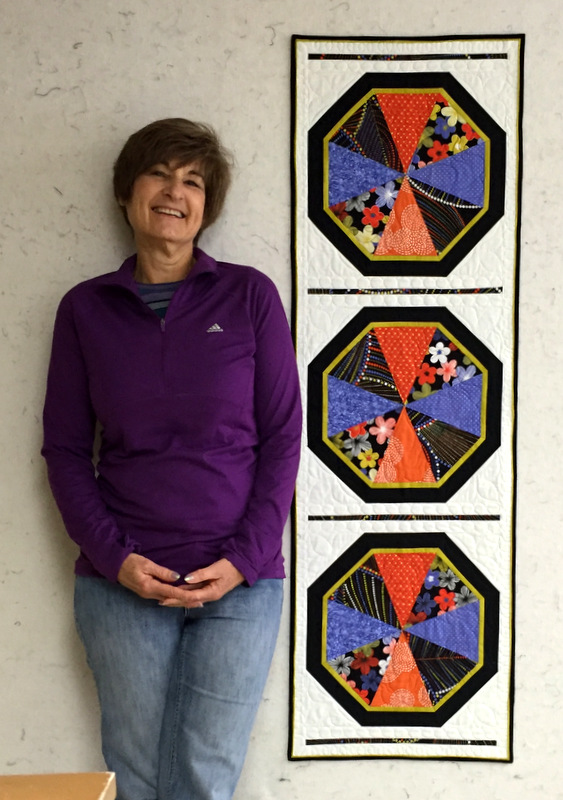
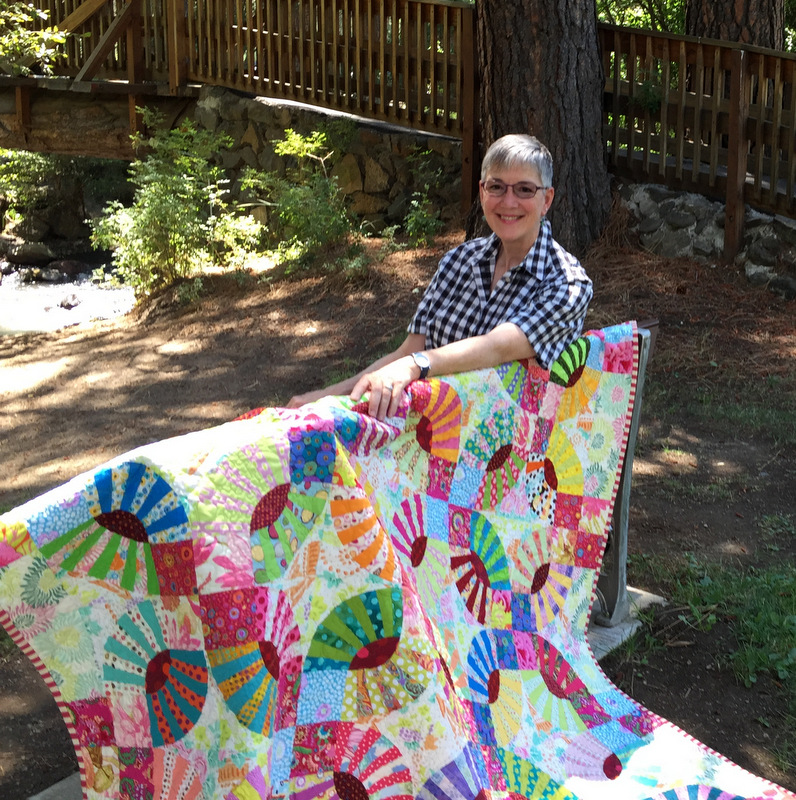
I asked Maxine to pose with her table runner so I could post a picture at this site:
Thank you, Maxine. Your table runner is beautiful!
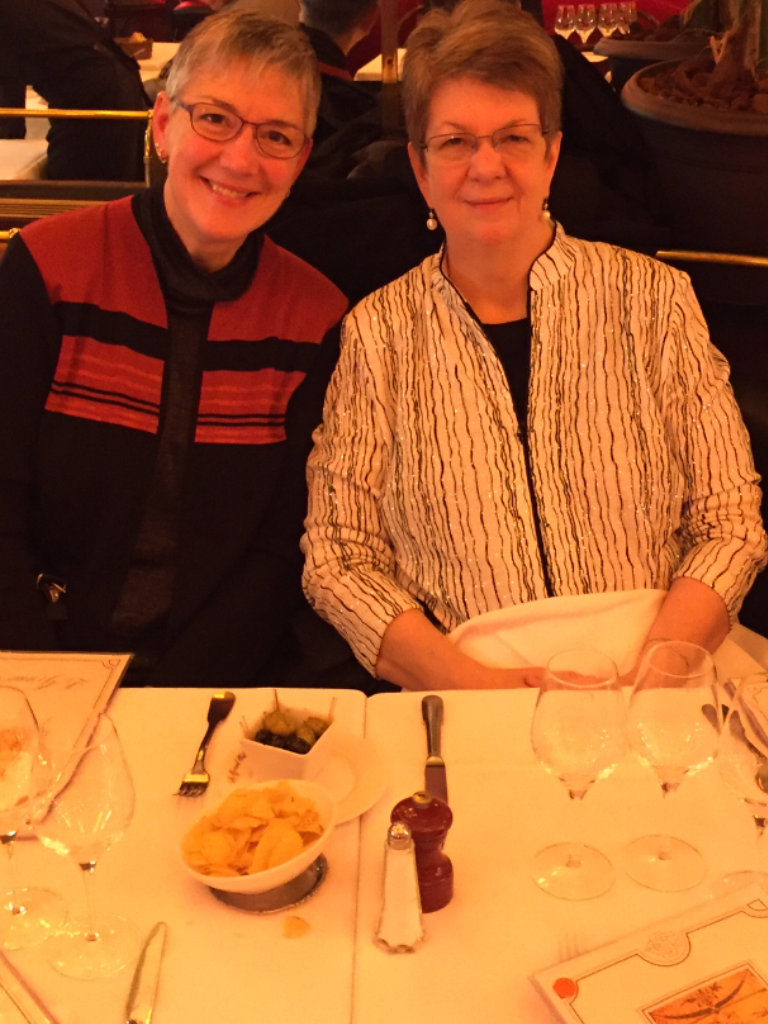
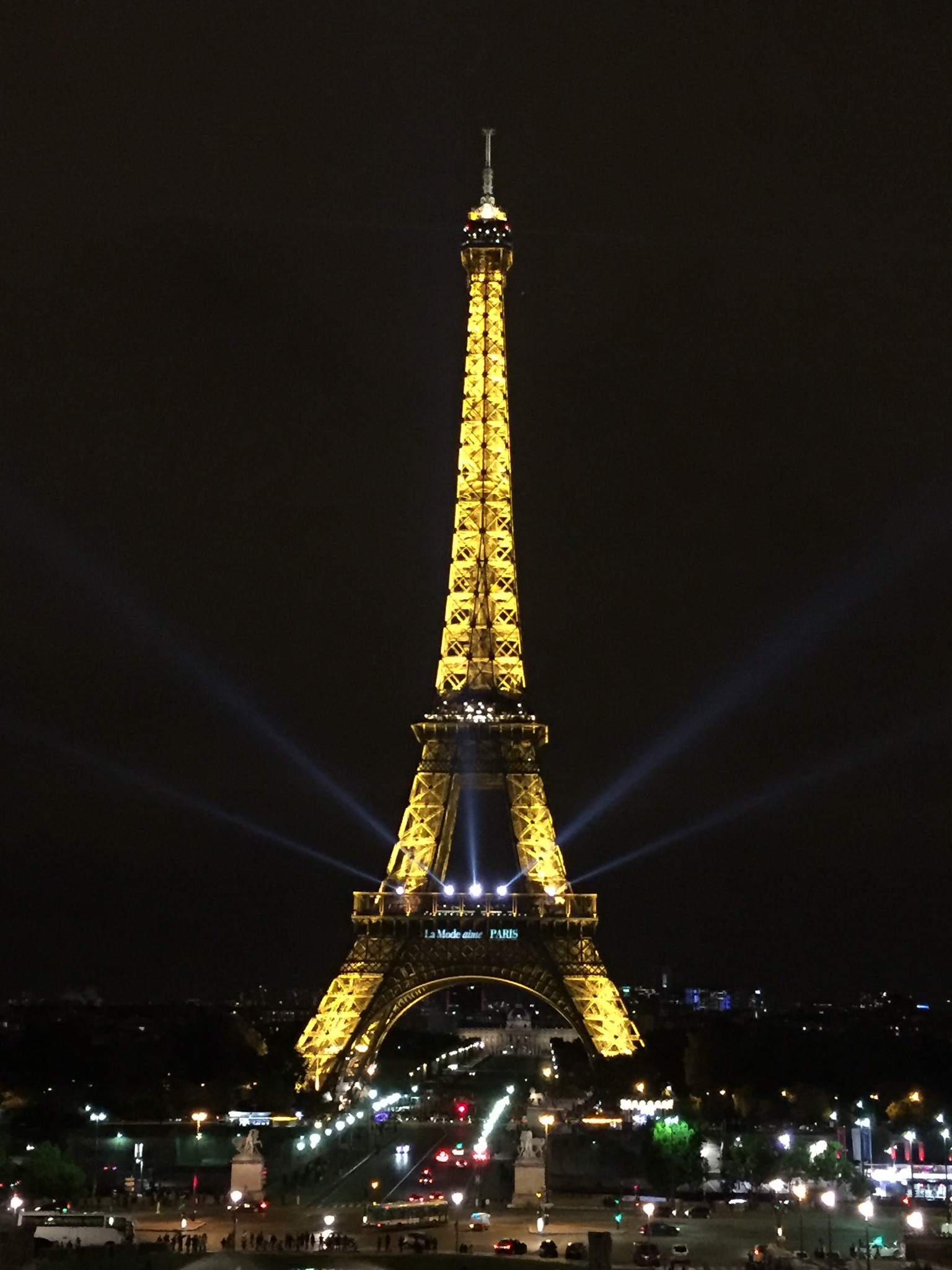
In a few short hours, my twin and I will be winging our way back to America, our two-week sojourn to Paris at an end. And what a wonderful sojourn it has been! I cannot imagine a better way to celebrate turning 65.
The big day is actually next month, but every time Diane and I lifted a glass of wine or champagne, we smiled at each other and said, “Happy birthday!”
Dawn and Diane in Paris
In a few days, when I’ve had a chance to sort and edit my pictures, I’ll post my favorite ones. I hope you’ll come back to see the highlights of our trip.
The late great Yogi Berra supposedly said that. Even if he never spoke those words, I know what he meant. I’m having a very déjà vu moment. I am in Paris, in the same apartment (Chez Anna) where my husband and I spent three weeks in the spring. This time my twin sister Diane is with me, and we are here for two weeks.
How did this stroke of good fortune come about? Well, Diane was supposed to join my husband and me for several days during our earlier stay. A family emergency (since resolved) kept her from coming. Her ticket was good for a year. Through a combination of luck and good timing, we were able to arrange this visit to coincide with a trip my friend Anna and her beau had scheduled to the United Kingdom.
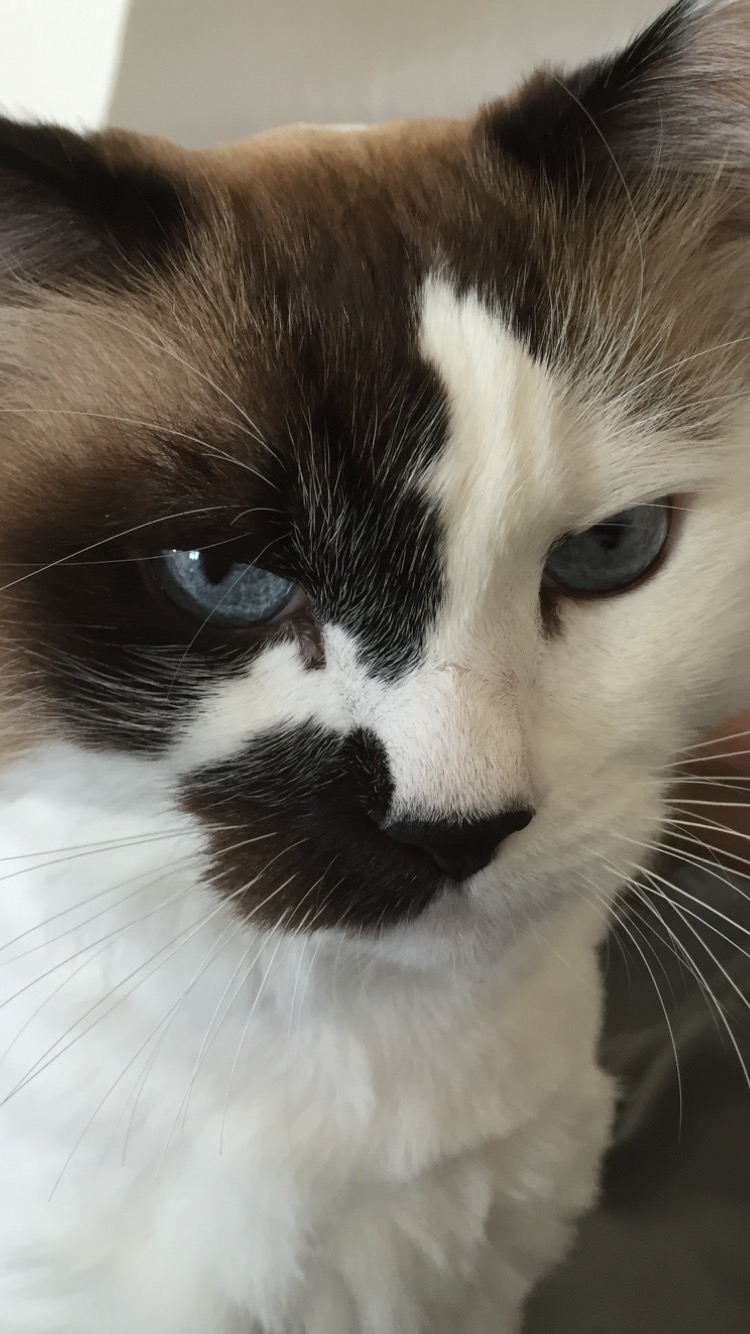
Part of the deal is that we take care of her cat Buddy, whom I already adore:
Diane and I have a Big Birthday coming up next month (think Medicare). Is this not the perfect way to celebrate turning 65?
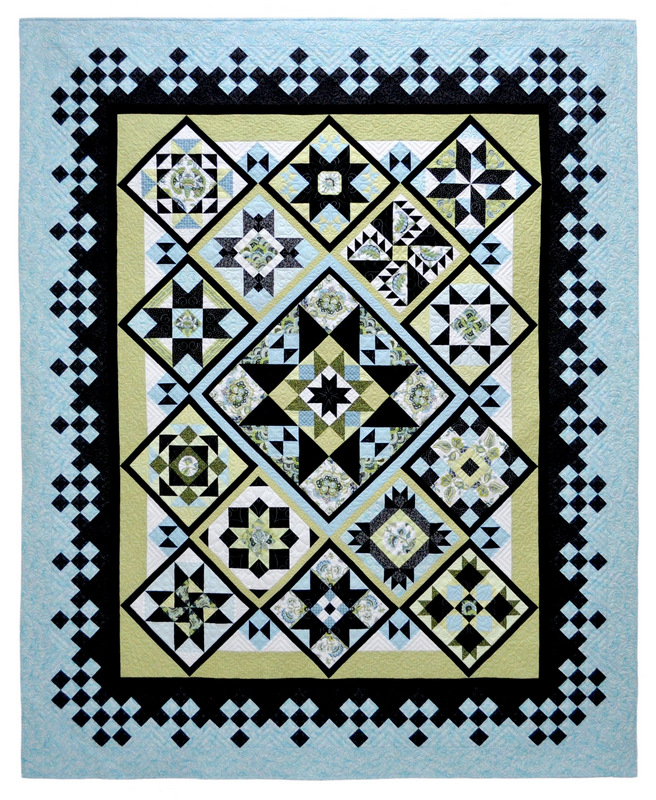
Catch a Falling Star, my quilt pictured above, hung in the Northwest Quilting Expo show in Portland last week (Sept. 24-26). It was a terrific show, with over 650 quilts on display. A friend and I spent the entire day there, walking slowly up and down every aisle, admiring the quilts and enjoying the vendor mall. Really enjoying the vendor mall, if you know what I mean. Someone did not come home empty-handed.
Northwest Quilting Expo is a juried show, and entrants could opt to have their quilts judged, with written comments delivered when the quilts were returned after the show. I decided to do that. These are the comments from the three judges:
“Lovely color palette. Sampler blocks are very well balanced.”
“Exceptional border treatment and frames central panel well.”
“Wonderful selection of quilting motifs.”
Those are very nice comments. I’m not sure what I was expecting — perhaps something about what I could have done better?
I was very pleased to see that last comment because Loretta Orsborn, the longarm quilter who quilted Catch a Falling Star, did such an outstanding job. On the day I took my quilt to her studio, we spent three hours looking at designs and choosing motifs. She expertly combined digitized and free motion quilting. If you’d like to see some close-ups of her work on my quilt, you can check out this earlier post.
Slowly but surely I’m making progress on the four baby quilts at the top of my “to do” list. Two of the four quilts will contain fabrics from the Migration line by Michael Miller Fabrics.
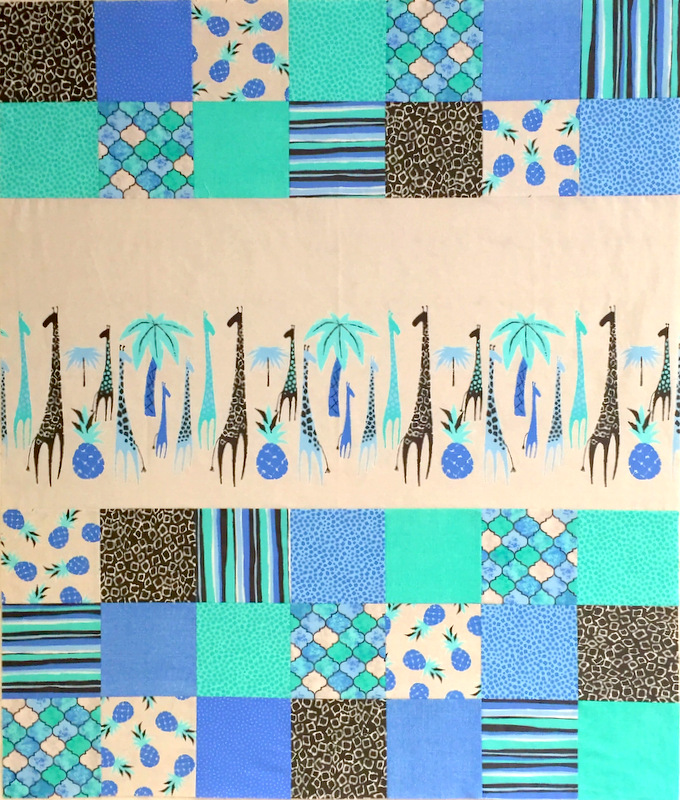
Thus far I have one top made:
Isn’t that giraffe fabric charming? It’s a border print. I wanted to set it off simply, so I cut 6½” squares from the other fabrics and made a double row of squares above the giraffes and a triple row below. That should have gone very quickly.
Should have, yes. But my (slightly) obsessive-compulsive nature took over. I got it into my head that I couldn’t have the same fabric appearing in a row or a column. The result? I spent an inordinate amount of time moving those squares around to avoid duplication, also taking into account the need to balance color, texture, and value. I am quite sure that the baby who winds up with this quilt won’t care a bit about which fabric ended up where. But me? I couldn’t sew those squares together until I felt I had it right.
This top measures 42½” x 50″ at the moment. It will shrink slightly after quilting but it’s a great size for a baby-to-toddler quilt.
The second quilt using the Migration line will have a slightly different setting. I’m thinking of cutting 3½” x 6½” rectangles and stacking them like bricks above and below the giraffe panel. More obsessing ahead?
Time to get going on four baby quilts. Two of the babies have already arrived and the other two are due soon. Fortunately, the parents of the intended recipients are patient souls. They know that sooner or later (usually later), the new arrivals will have quilts made just for them by their great granny or great auntie.
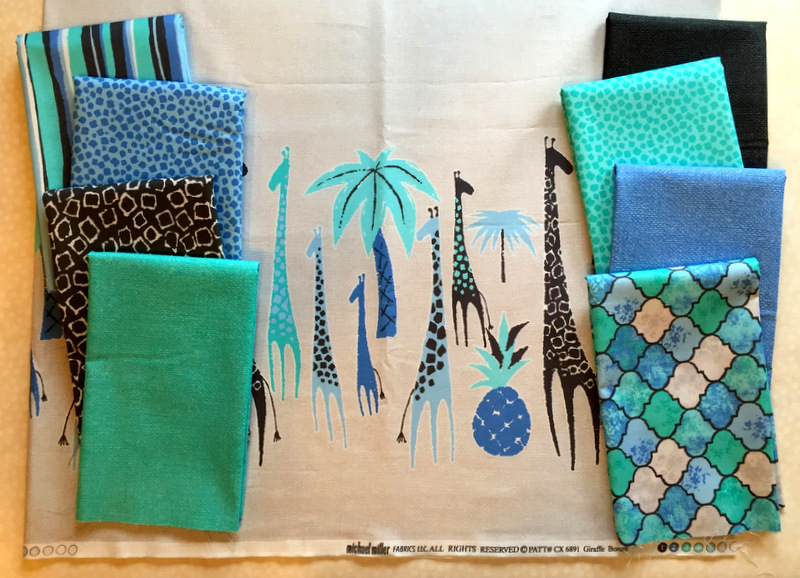
A new line of fabric I spotted at the Pine Needle last weekend was just the shot in the arm I needed. It’s called Migration by Michael Miller and includes a border print of slightly abstract giraffes. It’s not overly babyish. In fact, it’s quite sophisticated. With a palette of light grey, charcoal, aqua and blue, the fabric line works equally well for a boy or girl. Take a look:
See that stripe in the upper left in the photo above? I’m going to cut that into bias strips for the binding. I’m thinking about making the binding wider than I usually do to really show off those stripes.
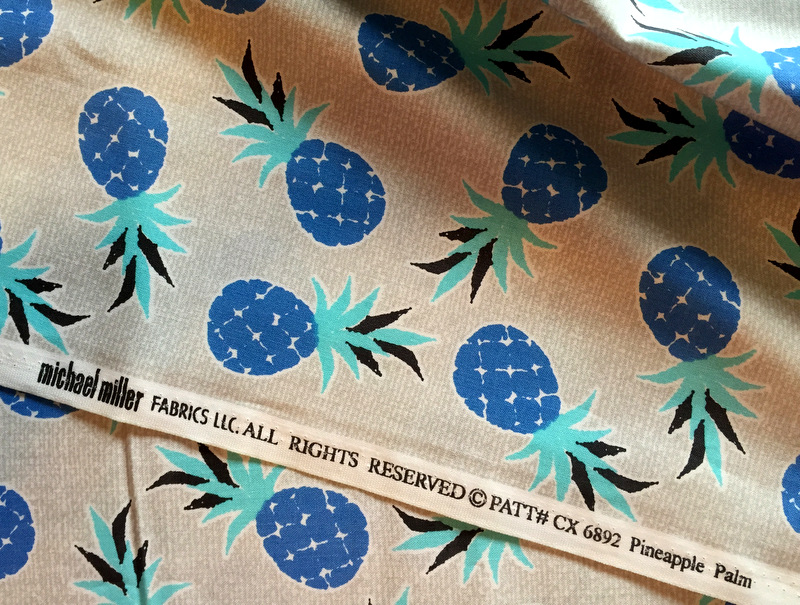
I also bought some of this companion fabric for the backing:
I have enough fabric to make at least two quilts. The plan for the first one is to cut sets of 6½” squares and arrange them in some fashion around the border print. This should be a fast and fun project! I’ll be sharing my progress so please stop by again.
Earlier this week I relinquished my temporary custody of Lee Fowler’s Pickle Dish quilt. It was the last quilt Lee made, finished just a couple of weeks before she died in 2013, and I was one of 25 friends who helped her make it. I wrote about it here. At the memorial service, Lee’s husband Rick LePage announced that each person who helped with the quilt would get to have it in her home for a few weeks.
In July this year, while I was in Sisters, Oregon with my quilt group, the Quisters, Lee’s quilt was passed on to me. As a member of the Pickle Dish Gang — the name Rick gave to the group of quilters who worked with Lee on the quilt — I had been waiting patiently for my turn.
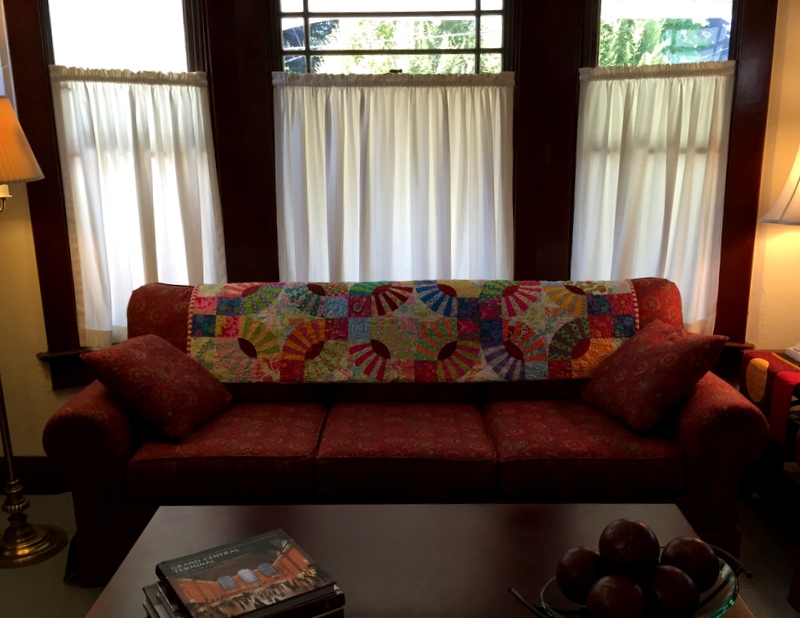
As soon as I got home I put it over the couch in my living room . . .
. . . and can honestly say that I looked at it several times a day the entire time it was here. It was a vivid reminder of Lee’s friendship and of the love that the members of the Pickle Dish Gang had for her.
A handmade book accompanies the quilt as it makes its way from one member to the next, so that each of us can write a personal message. At the end of the quilt’s journey, it will be returned to Lee’s family along with the quilt. In my entry I included this photo, taken at Creekside Park in Sisters in July:
Everyone who knew Lee knew how much this quilt meant to her. It means a lot to me, too, and I am so glad I got to be a part of its creation.
The Pine Needle Quilt Shop in Lake Oswego, Oregon is having its annual Fall Festival this Friday and Saturday, Sept. 11 and 12. The Pine Needle is my home away from home. I teach there, meet friends there, buy fabric there. When I get into my car to head to the Pine Needle, I don’t even need to steer; my car seems to know the way. Just kidding, of course, but it gives you an idea of the amount of time I spend there.
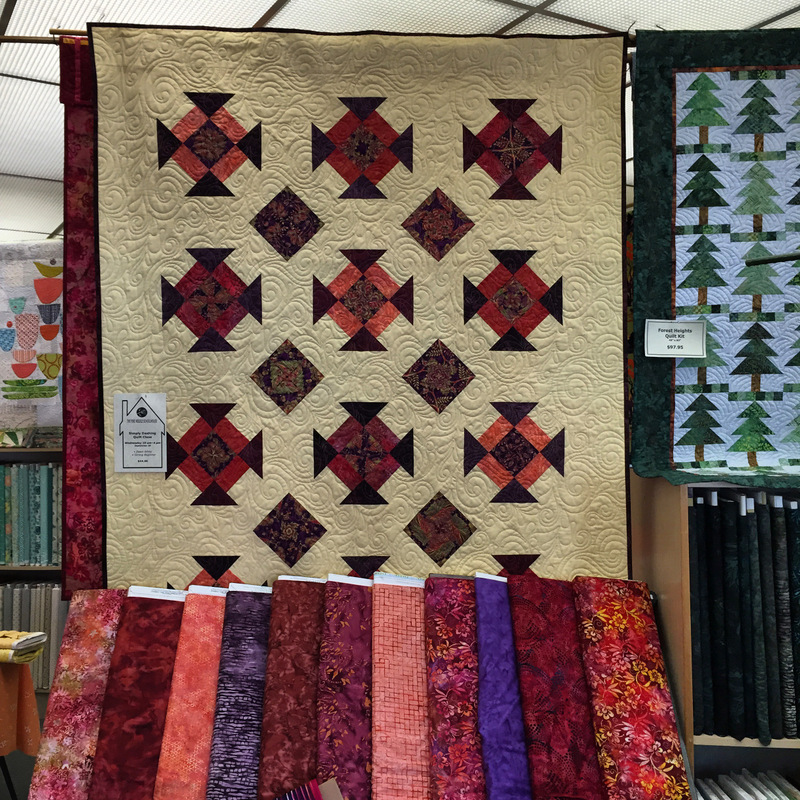
Those of us who teach at the Pine Needle will be on hand Friday and Saturday to tell you about our new classes and demonstrate popular quilting products. My new quilt, Simply Dashing, is one of the first quilts you see when you come into the shop:
Simply Dashing at the Pine Needle
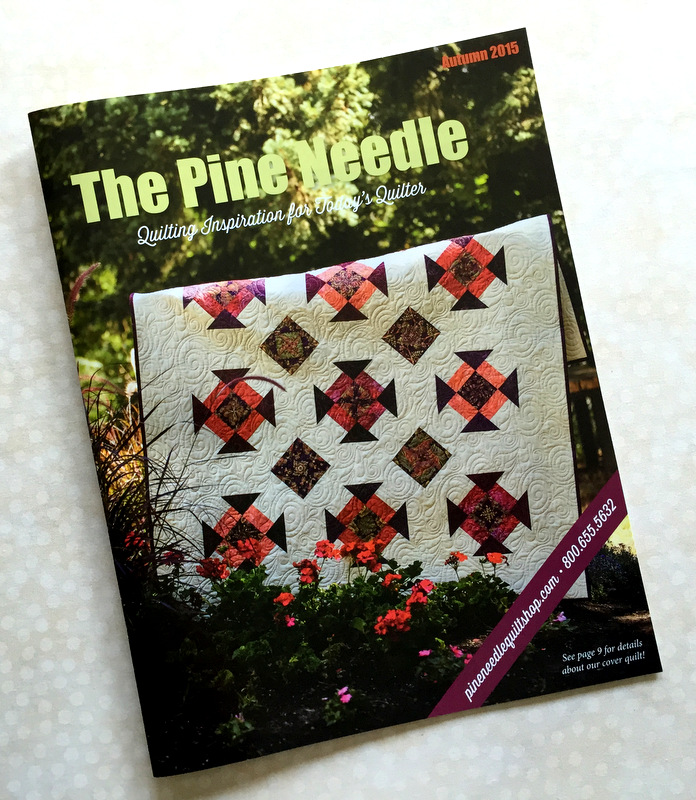
Not only that, it made the cover of the Pine Needle’s fall catalog:
I’m a Cover Girl!
The Pine Needle does a brisk mail order business, sending out thousands of catalogs to quilters who don’t live close enough to visit the shop in person. It tickles me to think my quilt is the first thing these people will see when they pull the catalog out of their mailbox.
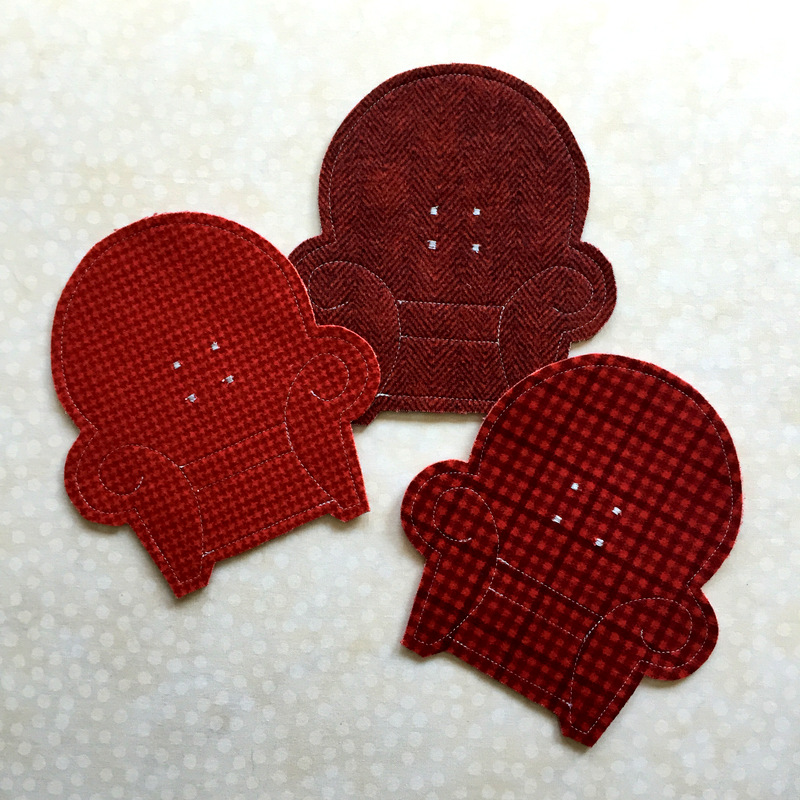
I usually try to come up with a little quilt or craft project to share with the people who come to the Pine Needle’s open houses. Since the shop is well known for its extensive inventory of flannels, my Fall Festival project is a flannel coaster in the shape of an overstuffed armchair, inspired by a felt coaster I bought some 30 years ago at a holiday craft sale.
Aren’t these cute? And very practical, too, because they’re reversible. The pattern and instructions are free with any flannel purchase. A quarter yard each of two flannels is enough to make four coasters.
During Open House the Pine Needle is doing lots of drawings for prizes — including a $50 gift basket each day. A few sets of my Cozy Flannel Armchair Coasters will be raffled off as well. Do come if you are in the neighborhood. I’d love to see you — and you just might be a winner!
That Fontella Bass song from 1965 keeps running through my head: “Rescue me, oh, take me in your arms . . .”
That’s just what I did a few weeks ago, when I stopped by the home of a very nice woman who was selling quilts as part of a downsizing move. Many of the quilts had been made by her mother, grandmother or greatgrandmother, and all three women had also acquired quilts at garage sales and antique stores. She wasn’t sure who had made what but she had piles of quilts that she was willing to part with.
I bought a fruit basket quilt in near perfect condition, which I posted about here. I also bought two other quilts which were not in great condition but I just couldn’t leave without them.
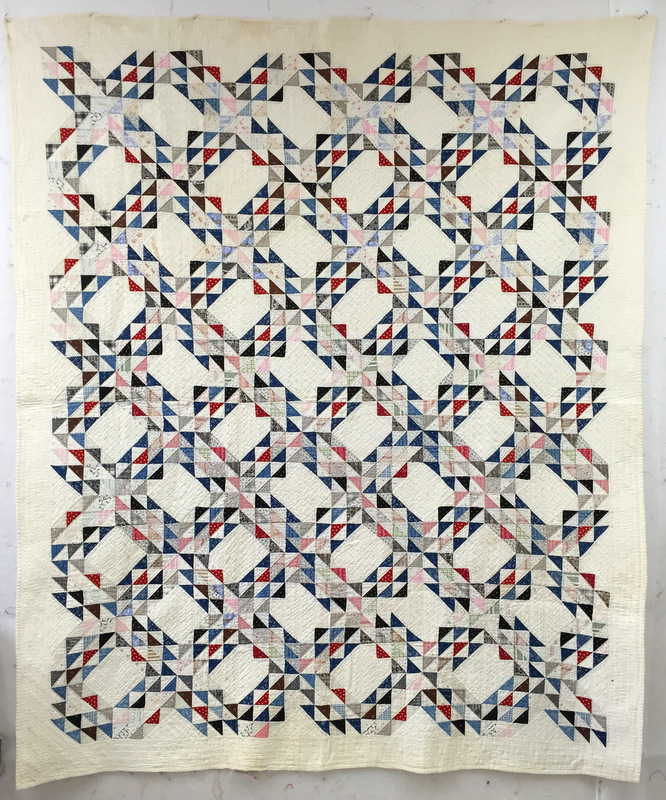
The first is this Ocean Waves quilt, measuring 70″ x 82″:
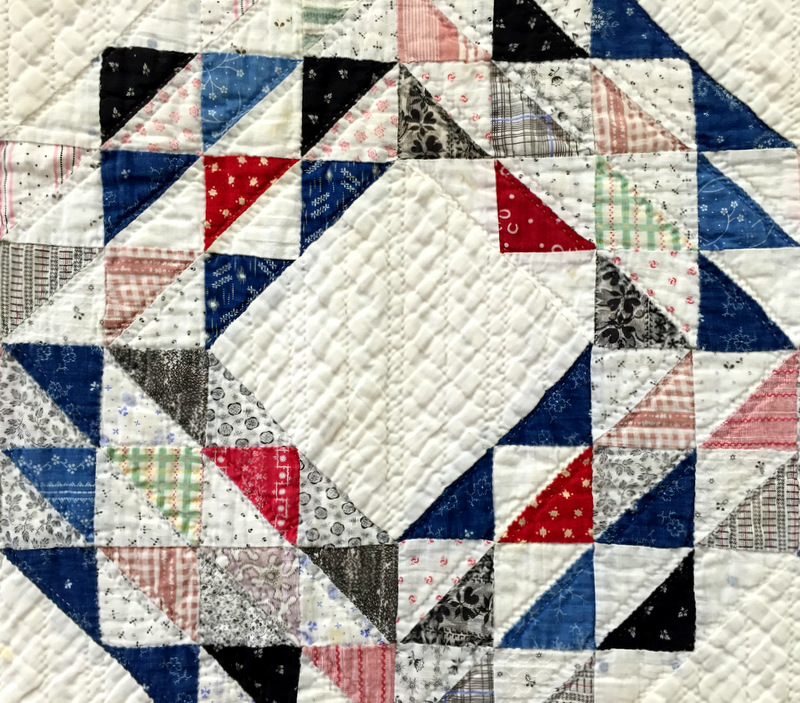
It’s entirely hand pieced and hand quilted, except for the binding, which was sewn on by machine. The quiltmaker did a beautiful job with her stitching and quilting. Here’s a closer look:
There’s some slight variation in size but most of the squares measure 1⅝”. Can you imagine cutting those triangles out by hand?
I could spend hours looking at the individual fabrics and admiring the precise stitches. The quilt is predominantly blue, black, red, and white, but if you look closely you can see other colors in the mix — green, pink, tan, even orange and brown. See the shirting fabrics in the background triangles? This quiltmaker knew about “low volume” fabrics long before that term started popping up in the quilt world.
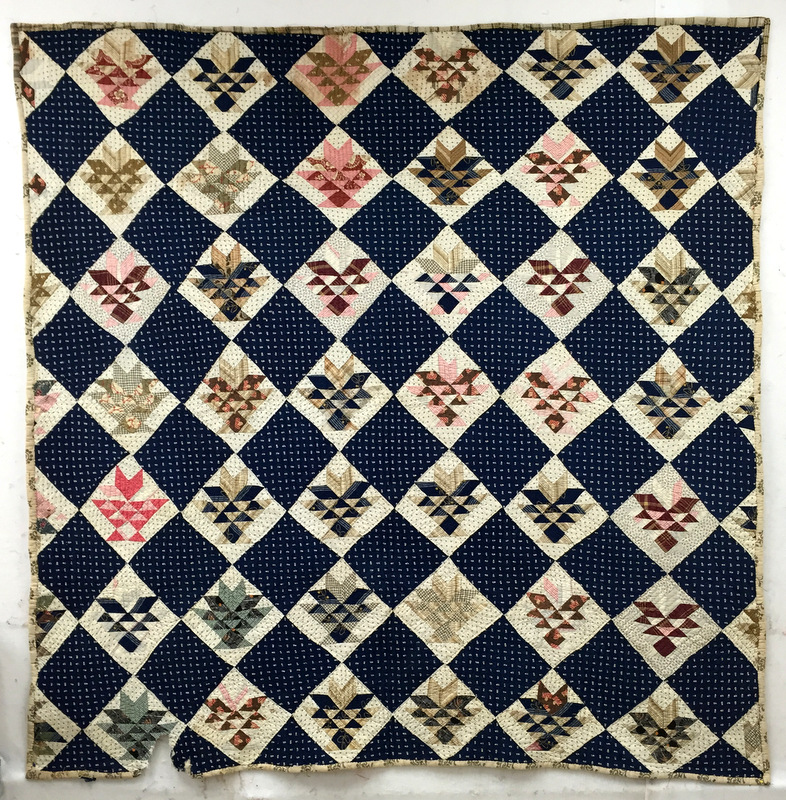
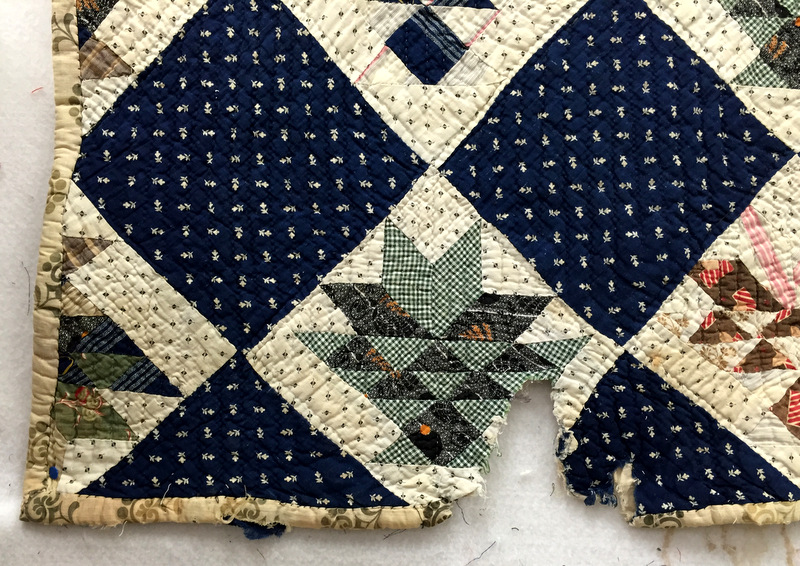
The quilt is quite frayed along the edges but otherwise is in pretty good shape. The same can’t be said for the second one, a Basket quilt, approximately 75″ square:
It’s also hand pieced and hand quilted but the quality of both is not nearly as high as in the Ocean Waves quilt. The Basket quilt was trimmed unevenly all the way around, with the points of some blocks lopped off and some basket blocks cut in half (sort of).
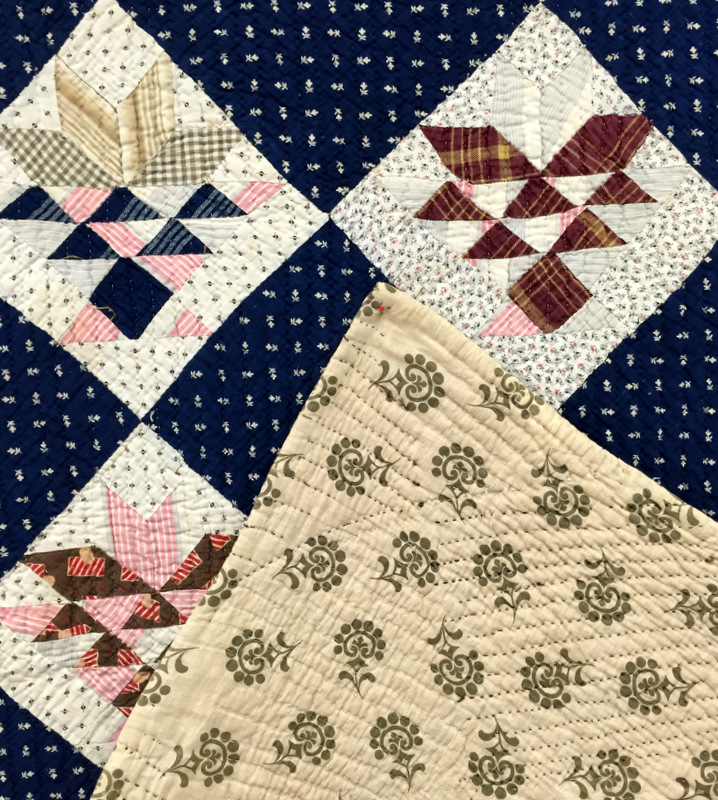
The fabric on the back was brought around to the front for binding . . .
. . . and you can see from the next photo that the folded edge of the binding was inexpertly sewn down on the right side:
And alas, at some point the bottom edge was chewed on by a critter of some kind.
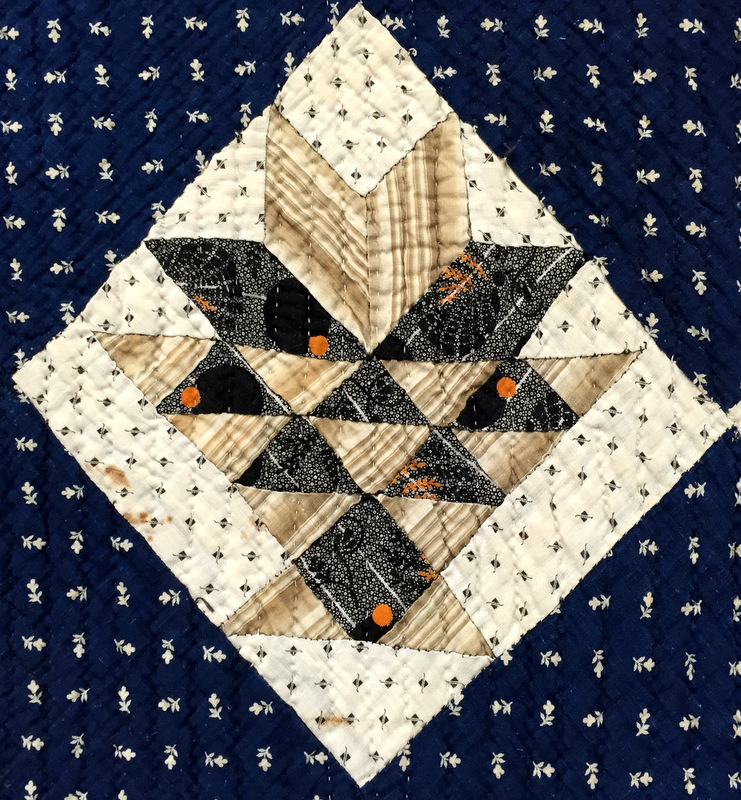
Still, I find this quilt oddly appealing. The fabrics are really very interesting. Look at the ones in this block:
I am sentimentally attached to this quilt, even though I have had it for such a short time. Some might consider it a “cutter” quilt, ready to be tossed in the garbage after any useable parts are cut out for crafting projects. I don’t think I could bring myself to do that, although the idea of making something decorative or useful out of a badly damaged quilt does have merit.
But then I am reminded of something my friend Bill Volckening, who knows a thing or two about old quilts, told me: “A rescue quilt is like a cutter that someone loved enough to save.” I get that. Out of respect for the quiltmaker and love of the craft, this rescue quilt is a keeper.
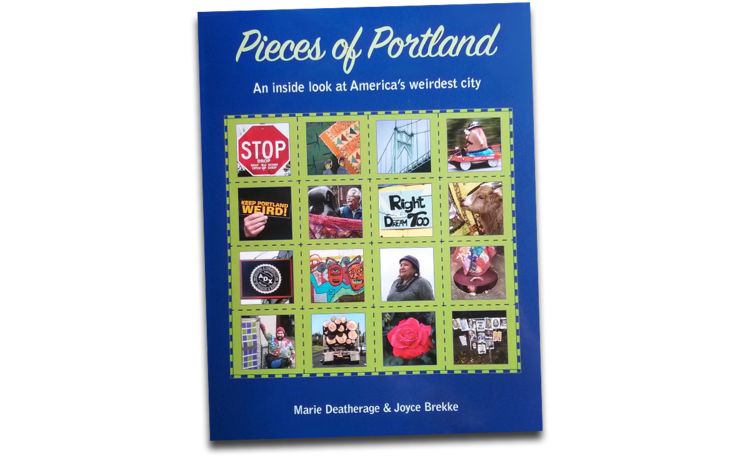
This is a book report, not a review. A review suggests impartiality, and I can’t be impartial because Marie Deatherage, the author of Pieces of Portland, is a friend of mine. But even if I didn’t know her, I would be rhapsodizing about this book because it is about two things near and dear to me: quilts and Portland.
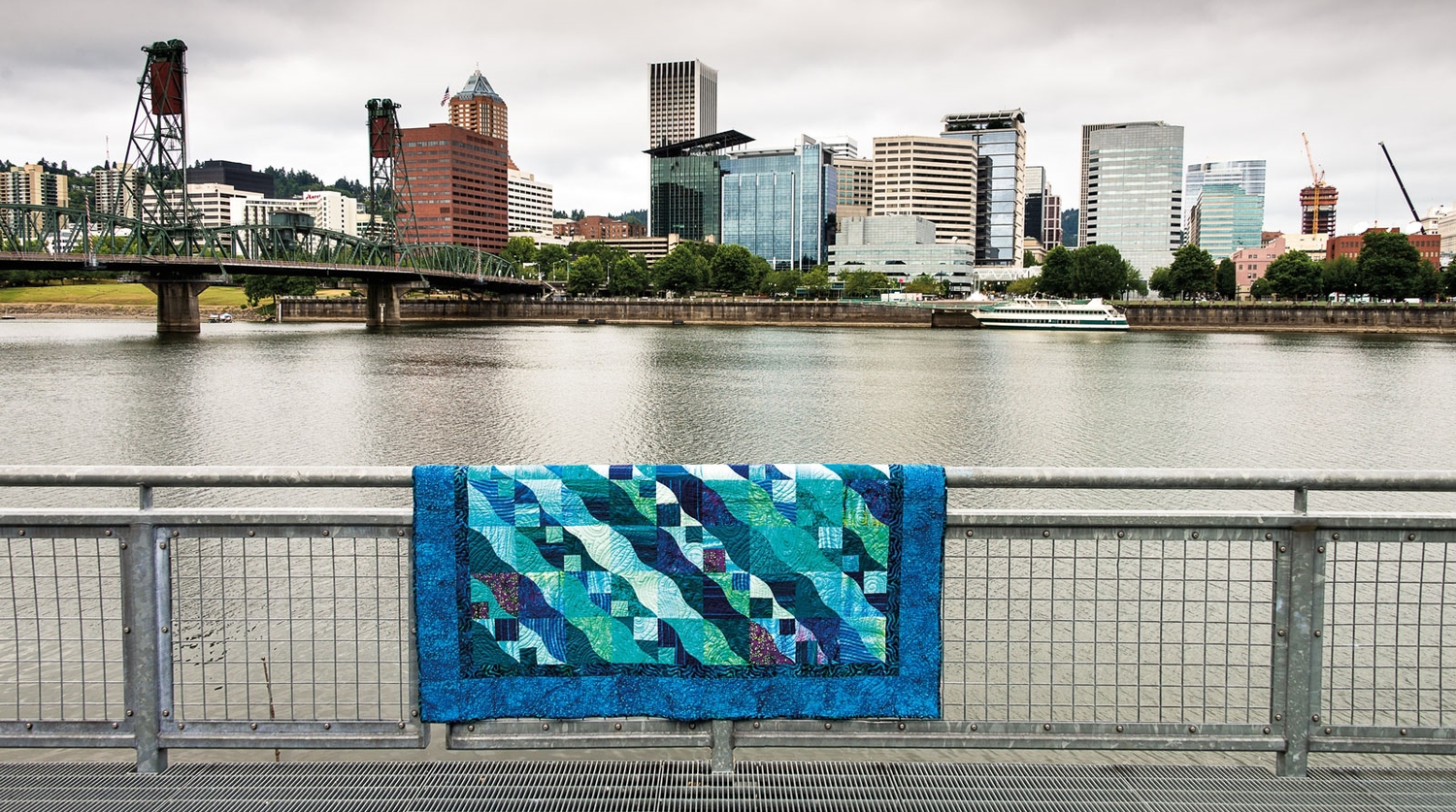
This photo, appearing on page 20, pretty much sums up the appeal of the book for me:
Quilt by Marie Deatherage. Photo by Joyce Brekke.
My family moved to Portland, Oregon when I was seven years old. That means I have spent the better part of 60 years in this city. I have watched it grow, have grown along with it. It is, quite simply, my city. Author Marie Deatherage and photographer Joyce Brekke, whose beautiful photographs enhance almost every page, have created a unique and wonderful book that explains in words and pictures everything I love about Portland.
Trained as a geographer, Marie has also been a college instructor, foundation grant administrator, disability rights advocate, and writer. She has drawn on those experiences — plus four decades of living in Portland — in writing this book. Joyce took up several hobbies, including world travel and photography, after retiring from a career in law. Originally from the Midwest, she settled in the Pacific Northwest and now lives across the river from Portland in Vancouver, Washington. Friends since their college days at the University of Chicago, Marie and Joyce share several interests, including quilting.
In 2011, in preparation for a one-woman quilt show by Marie, the two sought out landmarks and iconic places in Portland to use as backdrops for Joyce’s photos of Marie’s quilts. An idea for a book was born — but not the book you see pictured above. The original concept of a coffee table book featuring quilts photographed in Portland became something much more. The subtitle of the book says it all: An Inside Look at America’s Weirdest City.
In prose that is sometimes serious, sometimes wry, often humorous, frequently irreverent, and occasionally deeply personal, Marie writes about every topic under the sun that touches on Portland. Bridges. Urban farming. Politics. History. Flora and fauna. Food and drink. The environment. Parks. Neighborhoods. Fashion. People of Portland, past and present.
And, of course, the things that make Portland weird. Like the Unipiper, a street performer who plays the bagpipes while riding a unicycle. Like the miniature toy horses that appear in old neighborhoods tied to the cast iron rings that were attached to curbs back in Portland’s horse and buggy days when folks needed to tether their horses.
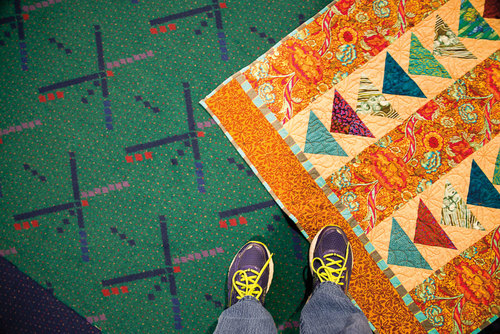
Like the roll of carpet recently removed from Portland International Airport (PDX) that was “appointed” grand marshal of the 2015 Rose Festival Starlight Parade. Here’s a photo of that carpet before it was removed from PDX:
PDX carpet shares the stage with a quilt by Joyce Brekke. Photo (page 93) by Joyce Brekke.
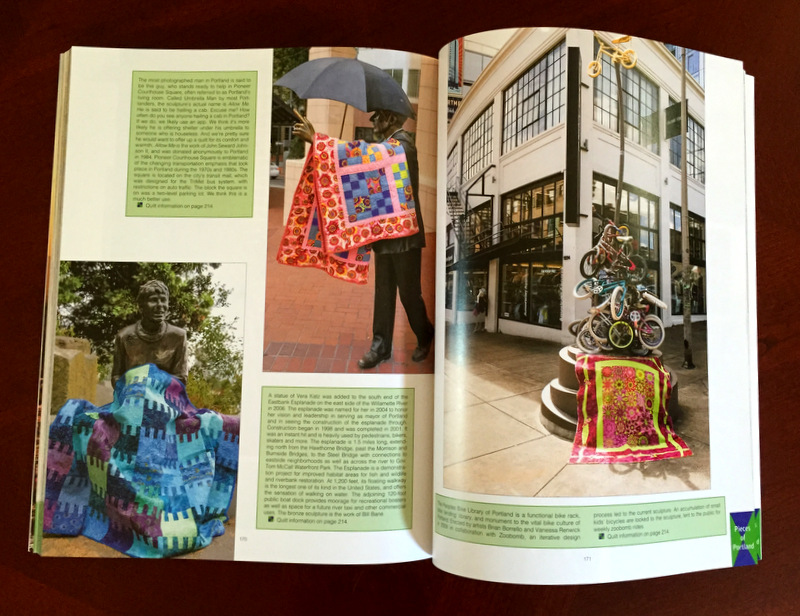
Whatever the subject, Joyce’s photos cleverly illustrate Marie’s words — with quilts. Lots of them. Take a look at pages 170 and 171:
Quilts by Marie Deatherage. Photos by Joyce Brekke.
On the left facing page are photos of two famous statues in Portland: Allow Me (aka Umbrella Man) in Pioneer Courthouse Square and former Portland Mayor Vera Katz on the Eastbank Esplanade along the Willamette River, both artfully draped in quilts made by Marie. On the right facing page is the People’s Bike Library of Portland, a monument to the bike culture of Portland.
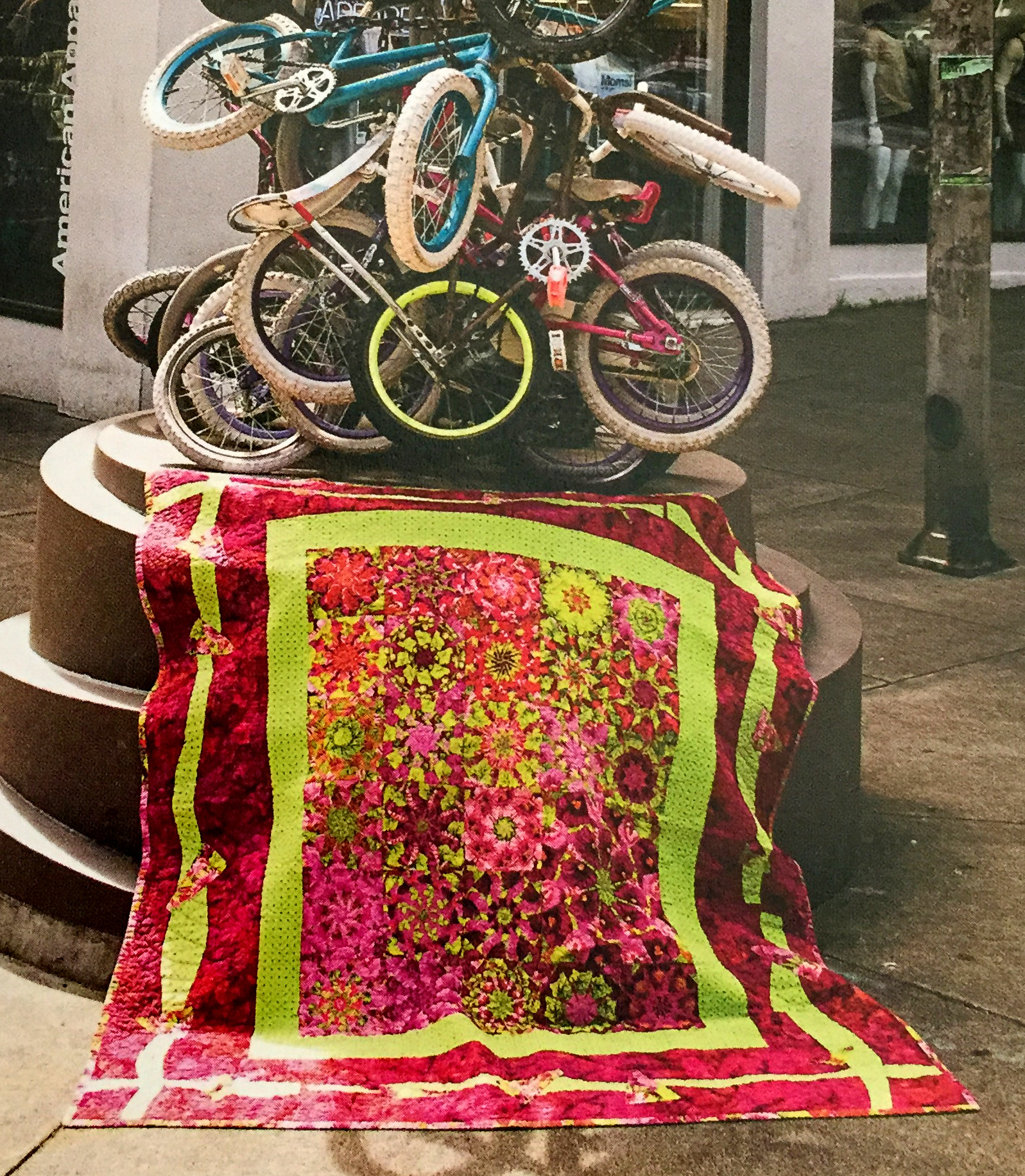
I love the fact that Marie’s kaleidoscope quilt — a favorite design of mine — evokes the spinning wheels of a bicycle:
Detail of quilt by Marie Deatherage. Photo (page 171) by Joyce Brekke.
Marie made most of the quilts in the book but there are several by Joyce and a few by Marie’s mother and grandmother. An annotated quilt index provides information on each quilt, allowing credit to be given to the designer, piecer, and/or professional quilter, and revealing the inspiration behind many of the quilts.
Published earlier in 2015 by Quiltlandia, Pieces of Portland was officially launched in July. In late June, the week before the launch party, Marie accepted an eleventh hour invitation to be a replacement guest speaker at a meeting of the Westside Modern Quilt Club held at the Pine Needle Quilt Shop in Lake Oswego. She brought armloads of quilts and boxes of books so fresh from the printer they hadn’t even been opened yet.
Marie told the assembled quilters about the making of the book as well as the stories behind many of the quilts that appear in the book. It was a marvelous trunk show. When well over half the quilters in the packed classroom bought copies of her book on the spot (which Marie graciously signed), I knew Pieces of Portland was a winner.
Now Pieces of Portland (258 pages with 400 full color photos) is available locally at Powell’s Books and just about every local quilt shop in the metropolitan area, including cool cottons in my own neighborhood. It’s also at New Seasons Market (a quilt book at a grocery store? How very Portland.). It’s coming soon to the Made in Oregon stores, and I have a very strong hunch it will be distributed much more widely very soon. You can order directly from the publisher by clicking here.
I’m so happy that I have my own autographed copy of Pieces of Portland! I have several people in mind who will be receiving copies in the near future. It’s the perfect gift for someone who loves quilting or Portland. Or both.
Marie and Joyce did not ask me to write about their book. I was motivated to do so by a desire to spread the word in Portland and beyond about a unique book that opens windows on a city and a craft that I love.