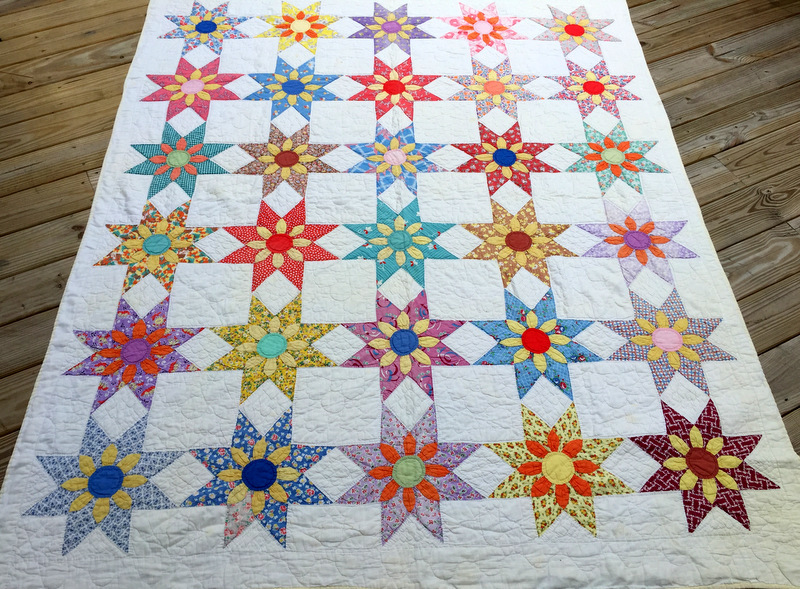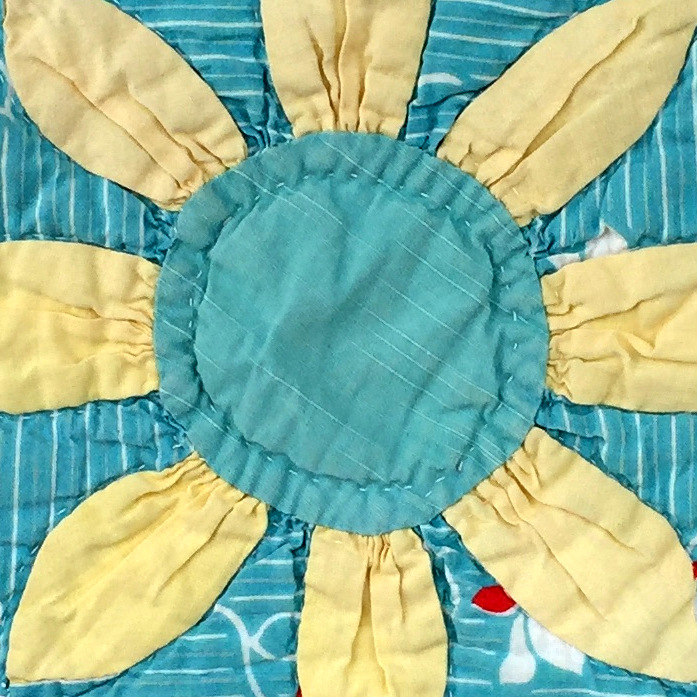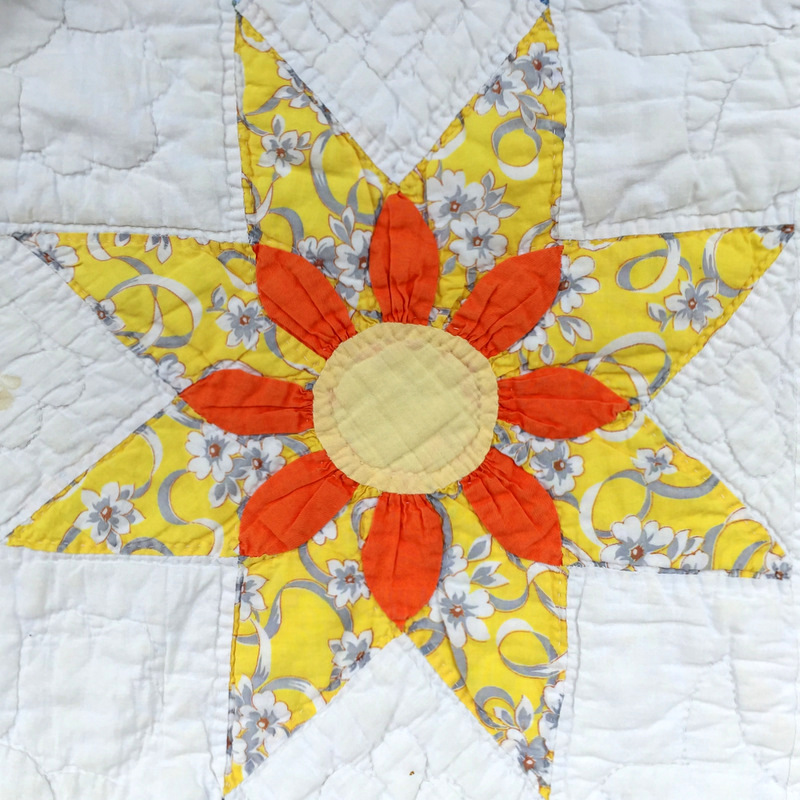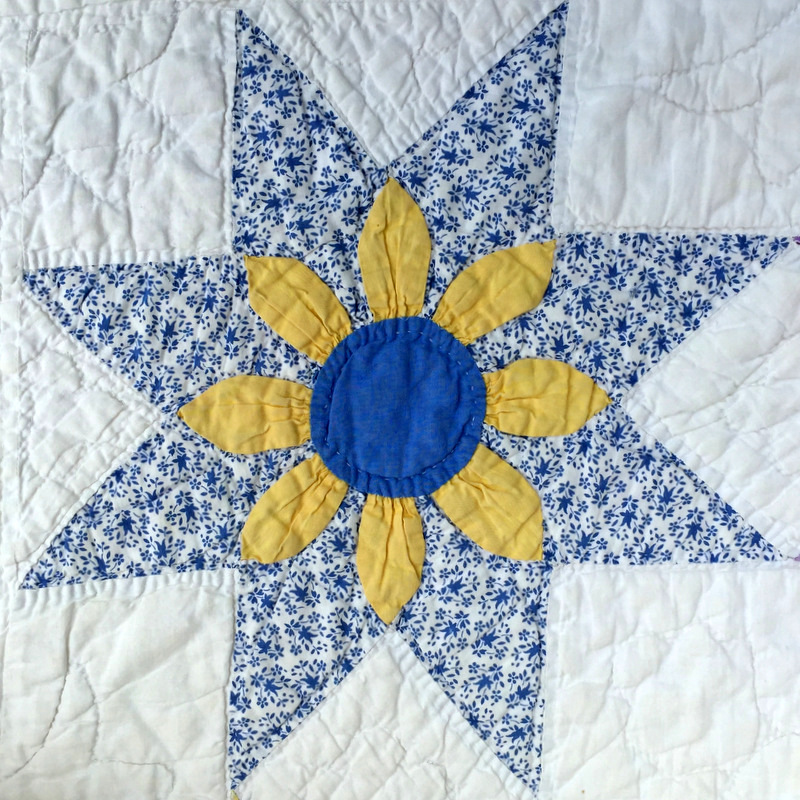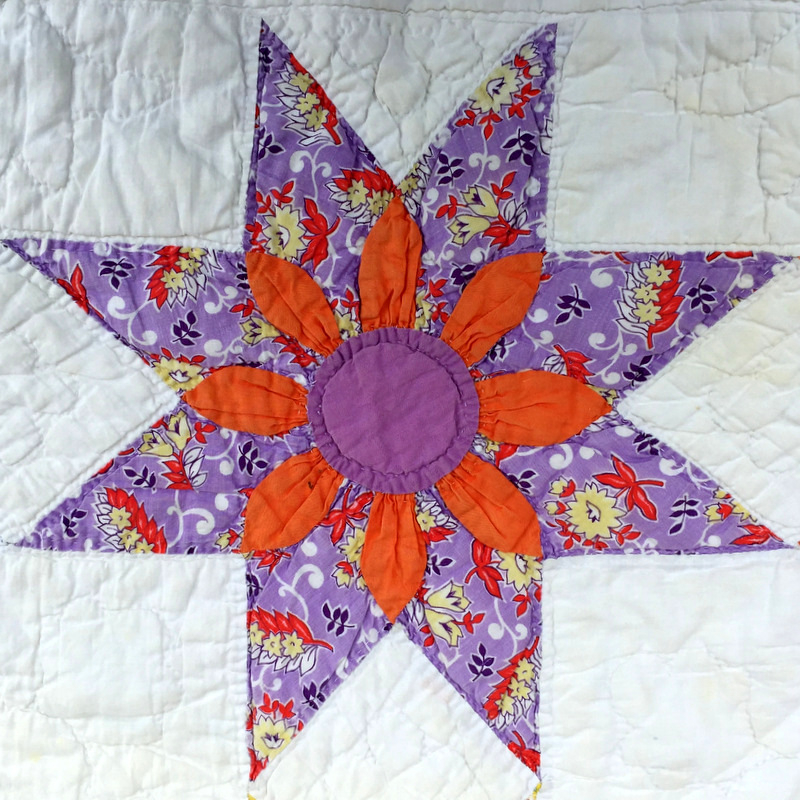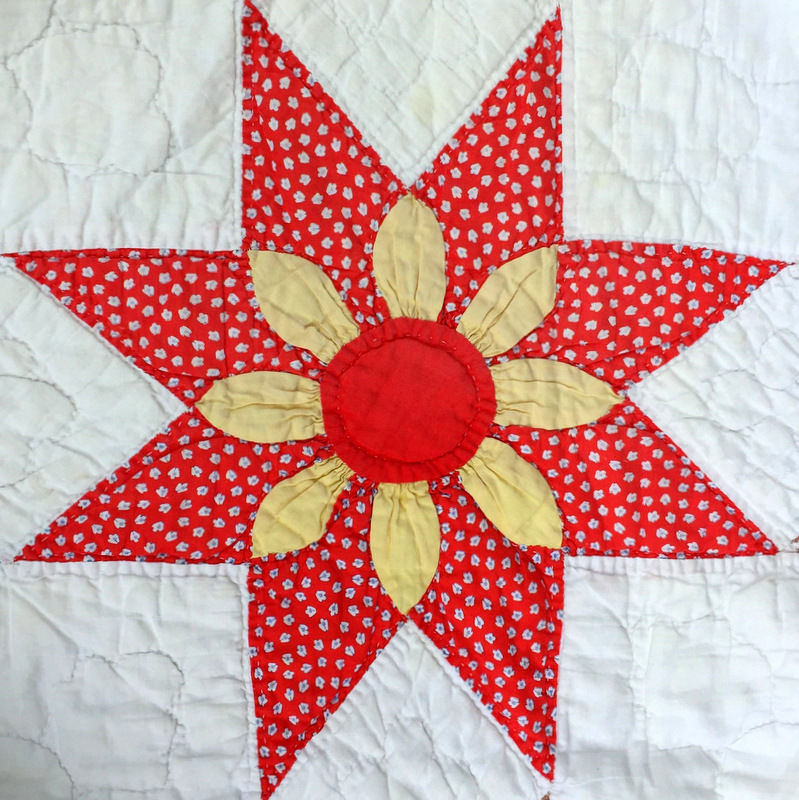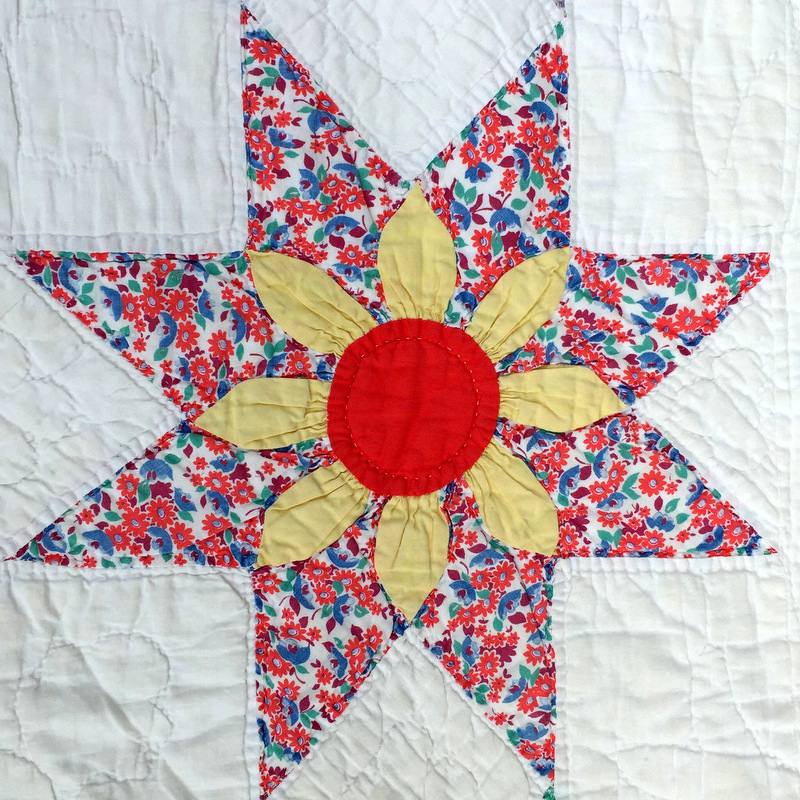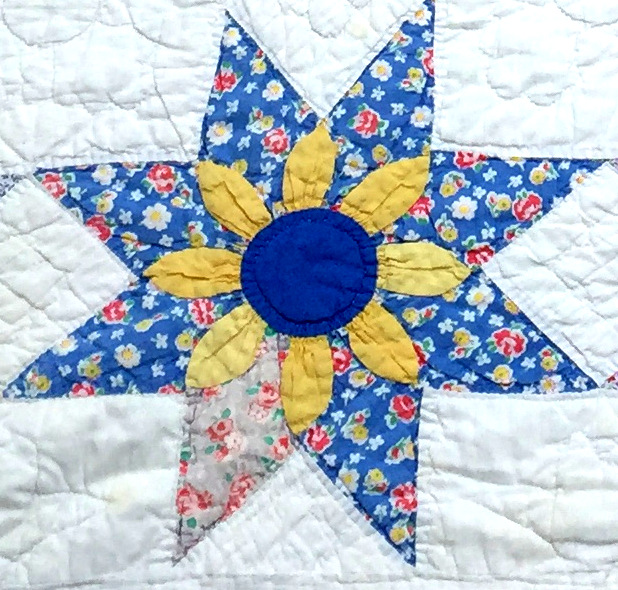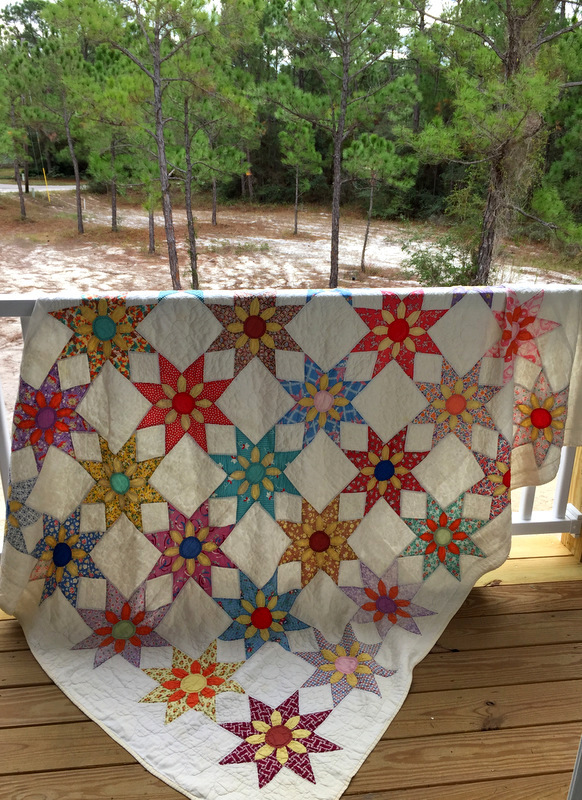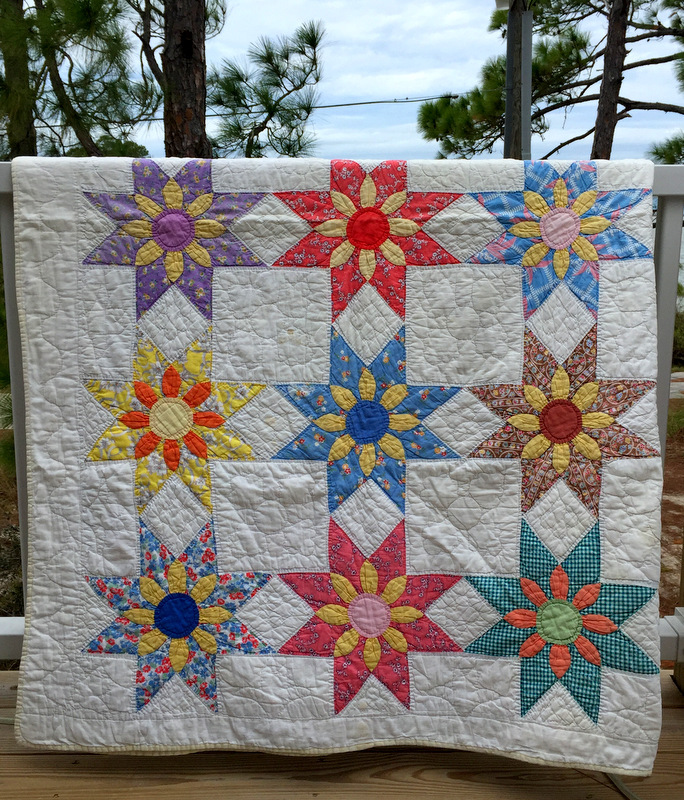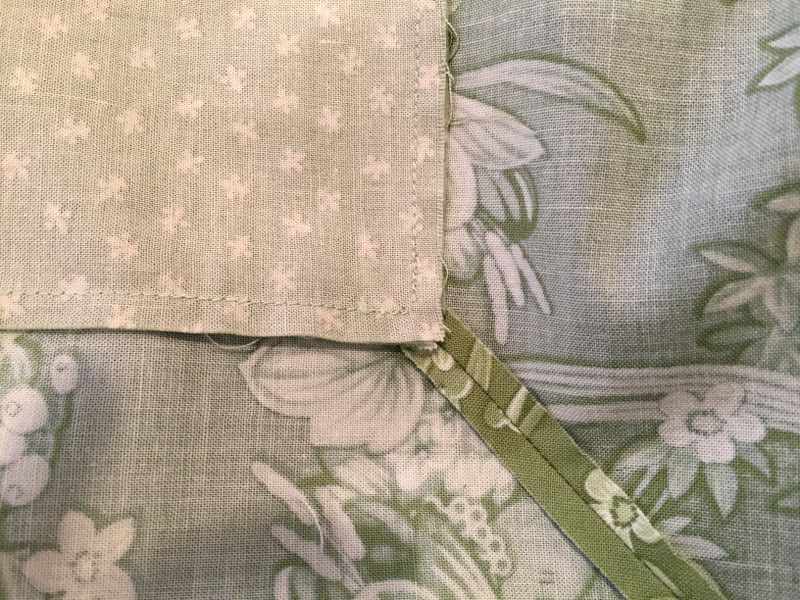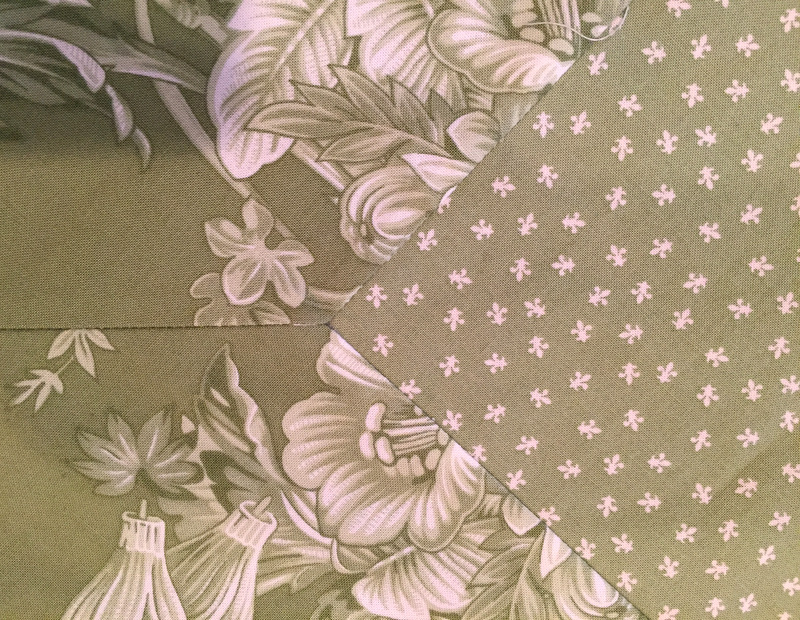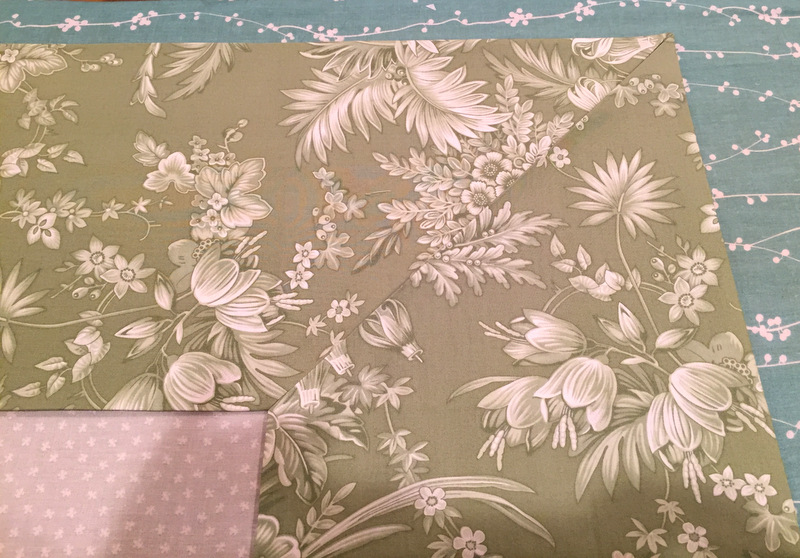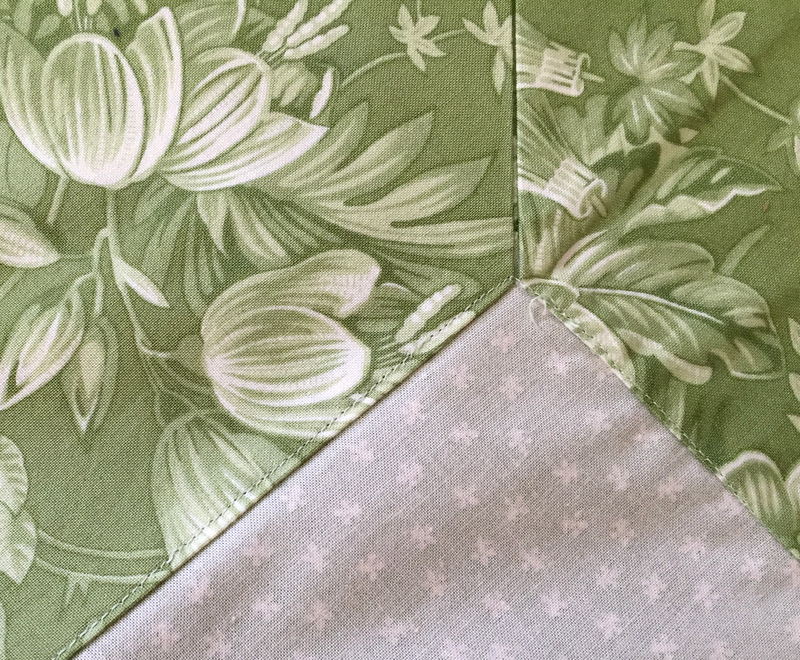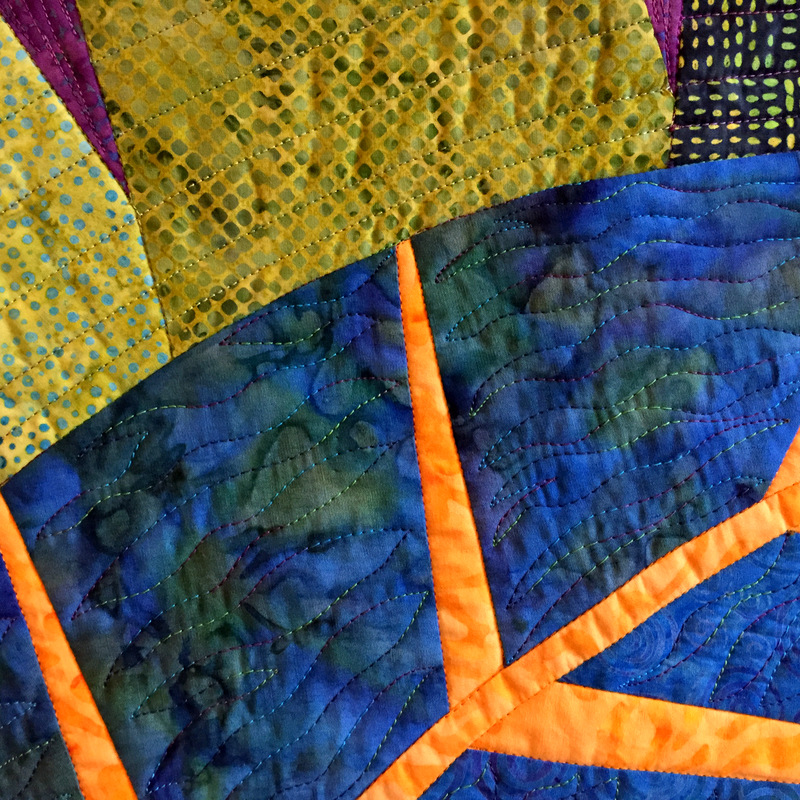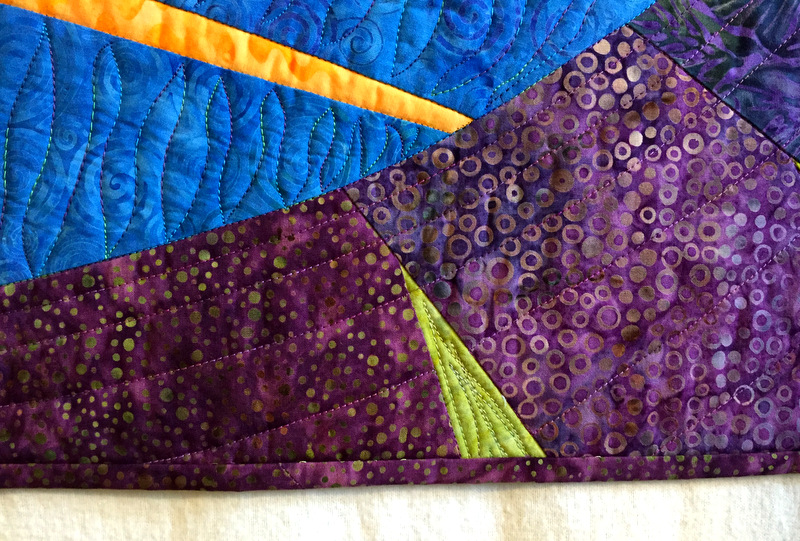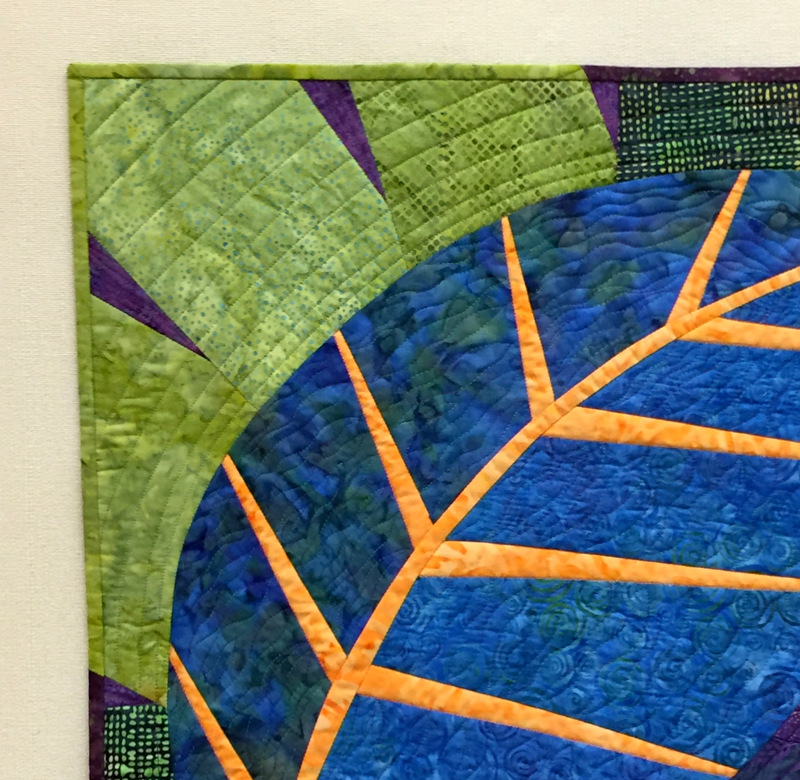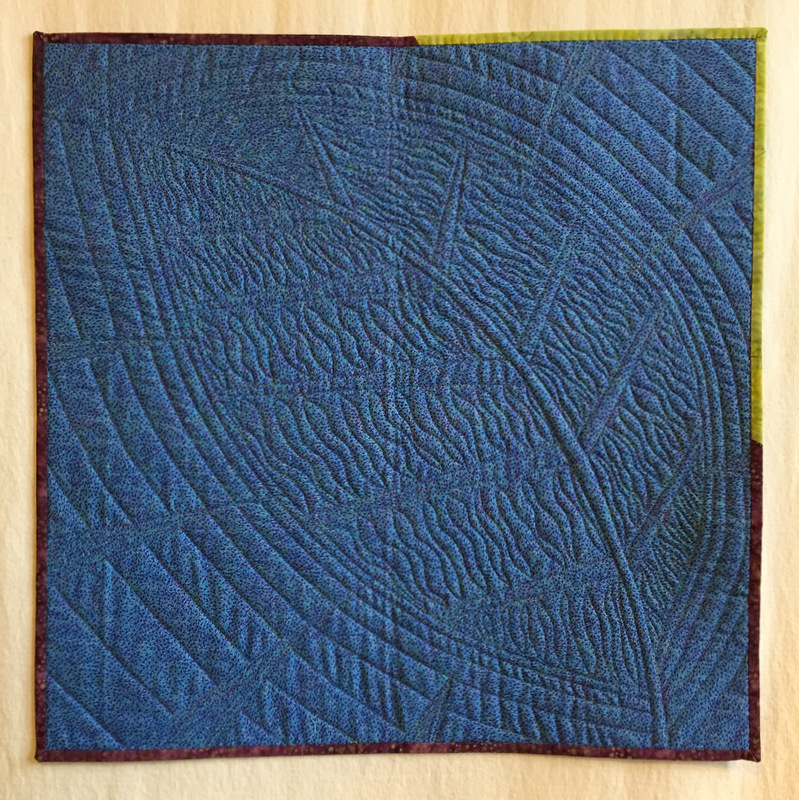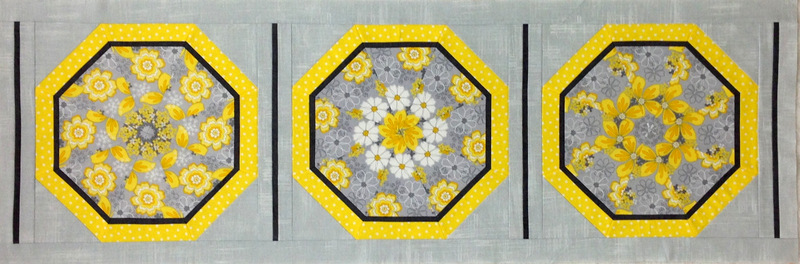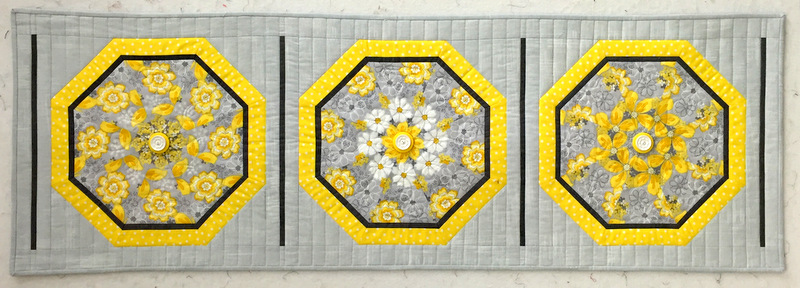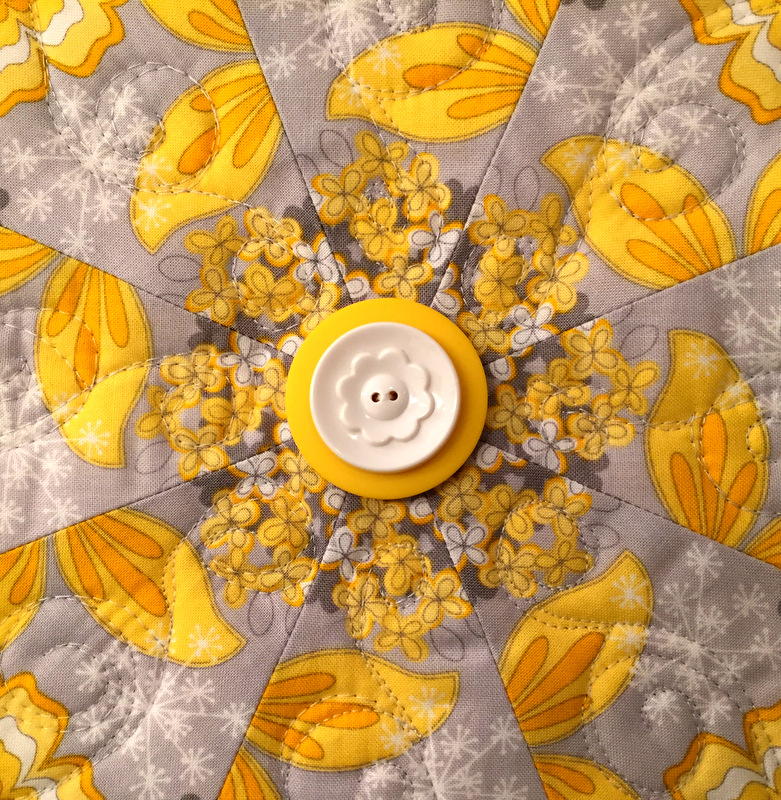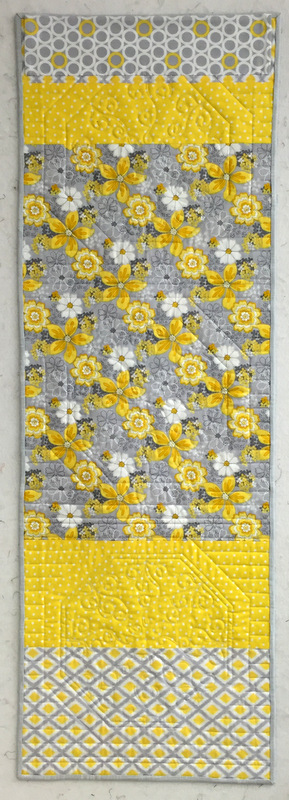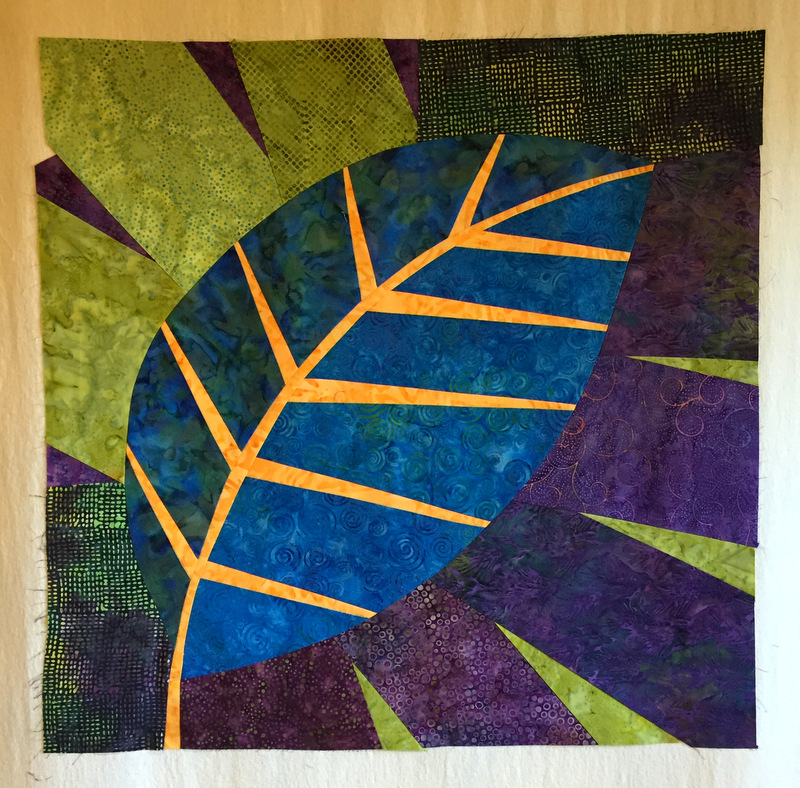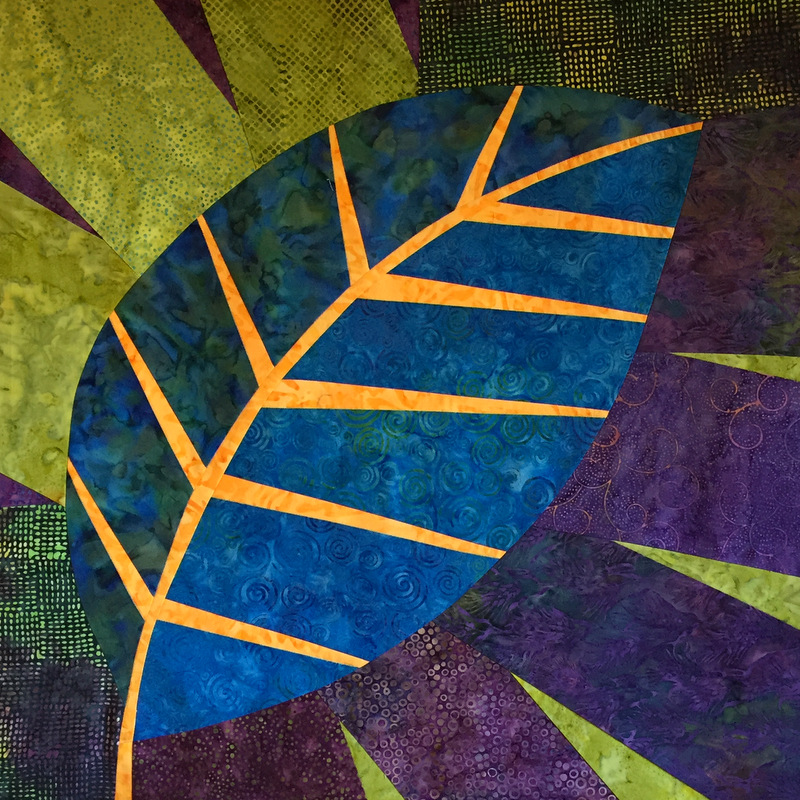
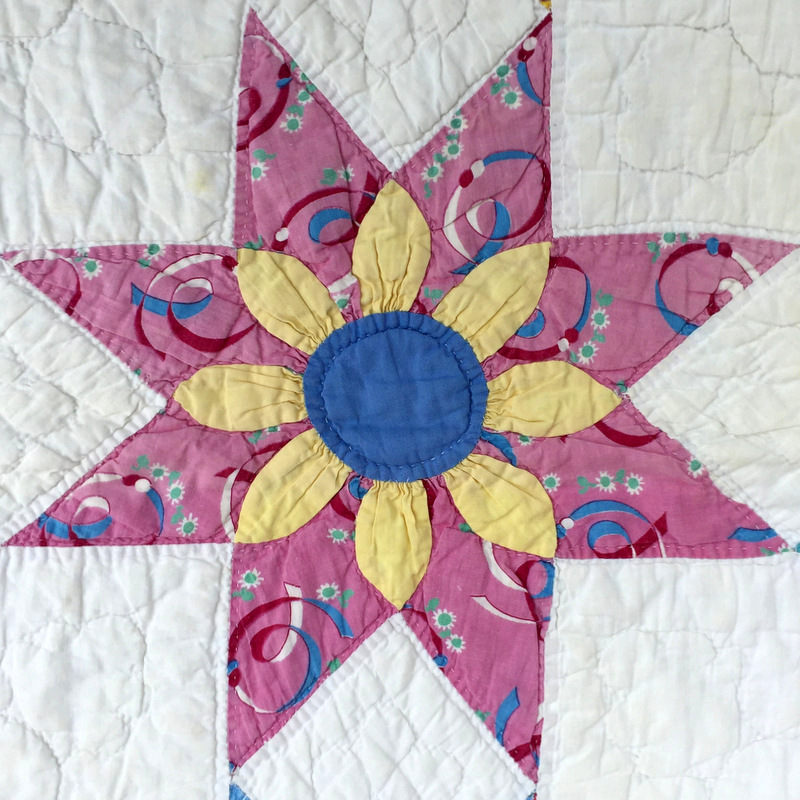
This block is one of 30 12-inch blocks in a lovely 66″ x 82″ vintage quilt I had the pleasure of examining recently at the home of my niece in Alabama. I wasn’t familiar with the block and published this post a few days ago asking if any of my readers could identify it. Within hours I had my answer. More correctly, I had my answers (as in plural).
It turns out this block goes by a few different names. Thanks to Bill Volckening, who suggested Barbara Brackman’s 1993 book Encyclopedia of Pieced Quilt Patterns as a source, I learned the names of two possible candidates: Star Dahlia and Kansas Sunflower. A quick search on my computer — ah, the power of the Internet! — was all it took to confirm that the block I asked about is indeed called Star Dahlia aka Amish Dahlia Star and also simply Dahlia. The Kansas Sunflower block is very similar, as is another block identified as Missouri Daisy.
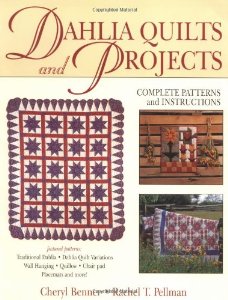 A reader named Anne told me about a book called Dahlia Quilts and Projects by Cheryl Benner and Rachel T. Pellman that contains several patterns using the Star Dahlia block. Anne even provided a link on amazon.com, which I immediately checked. Needless to say, I promptly ordered the book. I can’t wait till it arrives in my mailbox!
A shout-out to readers Arden, Bill, Anne, and Kimberly for offering suggestions and helping solve the mystery of this beautiful block.
It’s on my “to do” list for 2016!